
The Revolutionary and the Immigrant
On the divine misfortune of birthright, on the 250th anniversary of America

There is a story told about Louis Brandeis, long before he was a celebrated Justice.
While still a law student, his peers recognized his genius, and so they lamented his difference. If only he would renounce his Jewishness, the misfortune of his birth, he could be a great and powerful jurist one day. The young Brandeis demurred.
That is, until a speech he delivered on admission to an honors society. He started with a clear declarative: “I’m sorry I was born a Jew.” His classmates whooped in response, their teasing finally vindicated—until he resumed: “I’m sorry I was born a Jew, but only because I wish I had the privilege of choosing Judaism on my own.”
It is a paradox, a misfortune of birth: our divine chosenness into a peoplehood robs us of the chance to choose it.
Naomi does not choose Jewishness, but Ruth does—when she chooses Naomi. Along with her people, Ruth chooses her law.
E.B. White understood the zeal of the convert. In Here is New York, he described the three cities coexisting as one: the city of the native, providing its solidity and continuity; the city of the commuter, providing its tidal restlessness; and the city of the settler, providing its passion.
And whether it is a farmer arriving from Italy to set up a small grocery store in a slum, or a young girl arriving from a small town in Mississippi to escape the indignity of being observed by her neighbors, or a boy arriving from the Corn Belt with a manuscript in his suitcase and a pain in his heart, it makes no difference: each embraces New York with the intense excitement of first love, each absorbs New York with the fresh eyes of an adventurer, each generates heat and light to dwarf the Consolidated Edison Company.
Of course, New York is a mere metonym for that broader melting pot of heartsickness and adventuring: America.
On this, our 250th birthday, it should go without saying that the truest American is the one who has—just like the founders who fought and died for that freedom—chosen the country for herself.
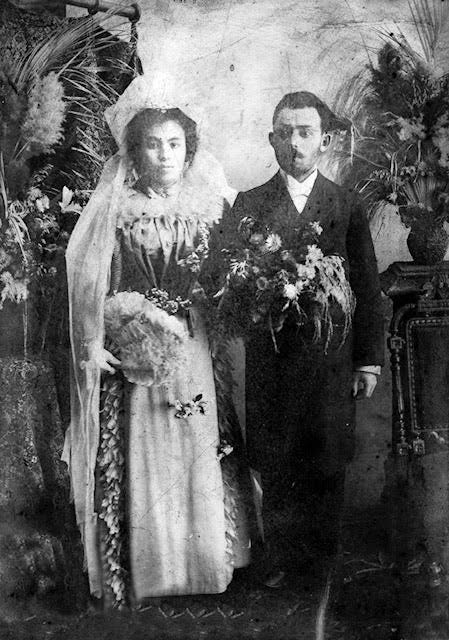
When the national identity is an idea, a love of liberty and a pursuit of happiness, there is something strange about citizenship as a birthright.
Like Naomi, we are gifted by birth our people and our law. But to live that citizenship must be, like Ruth, to make a choice.
It is a choice that only the revolutionary and the immigrant have been given the divine gift of making outright.
The rest of us can only rededicate ourselves each day to the ideals, and the models, of those who’ve done the choosing.